Why Winter Roof Stains Are a Bigger Deal Than Most Homeowners Realize
Roof stains are easy to overlook during the winter months. The days are shorter, the weather is colder, and most exterior home projects sit on hold until spring. But what many homeowners across York County don’t know is that winter is one of the worst times for stains to appear on roofing surfaces—and one of the most important times to pay attention to them.
Those dark streaks, green patches, fuzzy growths, or discolored shingles aren’t just cosmetic problems. They’re early warning signs of deeper issues that can lead to roof deterioration, leaks, mold intrusion, and expensive structural repairs if ignored.
This is especially true in areas with moisture fluctuations like Lake Wylie, Rock Hill, Fort Mill, Tega Cay, York, and Clover, where cool nights, warm afternoons, and high humidity create the perfect environment for algae, mold, and moss to thrive.
A clean roof doesn’t just look good—it performs better and lasts longer. And winter roof stains? They’re telling you something important.
What Those Dark Streaks on Your Roof Really Mean

The most common winter roof stain homeowners notice is the long, dark streaking that appears on asphalt shingles. This discoloration can look like dirt or water runoff at first glance, but in most cases, it’s caused by Gloeocapsa Magma—a hardy blue-green algae that loves humid climates and shaded roofing surfaces.
Once it begins developing, this algae spreads across your shingles, feeding on the limestone filler inside them. Over time, this damages shingle integrity, reduces UV protection, and shortens your roof’s lifespan.
During the winter, when the sun is lower and moisture lingers on surfaces longer, this algae becomes even more noticeable. If you’re seeing these stains now, it likely means:
The algae has been growing for months
Your shingles have absorbed more moisture than usual
Your roof’s protective layers may be wearing down
Algae doesn’t go dormant in winter—it simply grows slower, which makes stains easier to see and easier to treat without the intense heat of summer.
Green or Fuzzy Growth? That’s Moss – and It’s a Bigger Problem
Unlike algae, moss is a plant, and winter is one of its favorite seasons. The cool, damp environment creates ideal conditions for moss to flourish, especially on rooftops shaded by trees or positioned on the northern side of a home.
Moss is more than a stain, it causes physical damage:
It lifts shingles and allows water to seep underneath
It holds moisture against roofing materials
It leads to rot, decay, and mold intrusions
It compromises your roof’s structural integrity
The longer moss stays on your roof, the more aggressively it spreads. And in winter, when freeze-thaw cycles occur, water trapped under moss expands and contracts, potentially cracking shingles.
Once moss establishes itself, it requires a professional roof cleaning approach—never scraping, never power washing, and never applying harsh DIY chemicals. RC Power Cleaning uses safe soft-wash techniques that eliminate moss at the root without harming roofing materials.
Orange or Red Rust-Like Stains? Look for Metal Components
Some homeowners notice orange, reddish, or brown roof stains in winter, which sometimes look like rust running downward from a particular area.
These stains typically appear when:
-
Metal flashing begins to corrode
-
Old vent pipes deteriorate
-
Chimney caps or hardware start breaking down
-
Rainwater carries metal residue down the roof surface
In many cases, these stains indicate that a small metal component is failing. Winter moisture worsens corrosion, meaning the problem becomes more noticeable during cold months.
A professional roof cleaning can remove these stains safely while also identifying the failing metal materials before they create leaks.
White or Chalky Stains? Could Be Mineral Deposits
White streaks or powdery residue often come from calcium, salt, or mineral deposits left behind by evaporated moisture. While common around chimneys or roof edges, winter weather can make these streaks heavier and more defined.
Mineral stains usually point to:
-
Brick or masonry that’s retaining moisture
-
Leaking chimney crowns
-
Hard water deposits from AC runoff
-
Old sealants breaking down
Even though the stains themselves might seem harmless, the source behind them often requires attention. A roof cleaning professional can clean the stain while recommending next steps to prevent recurring issues.
Why Roof Stains Become More Noticeable in Winter
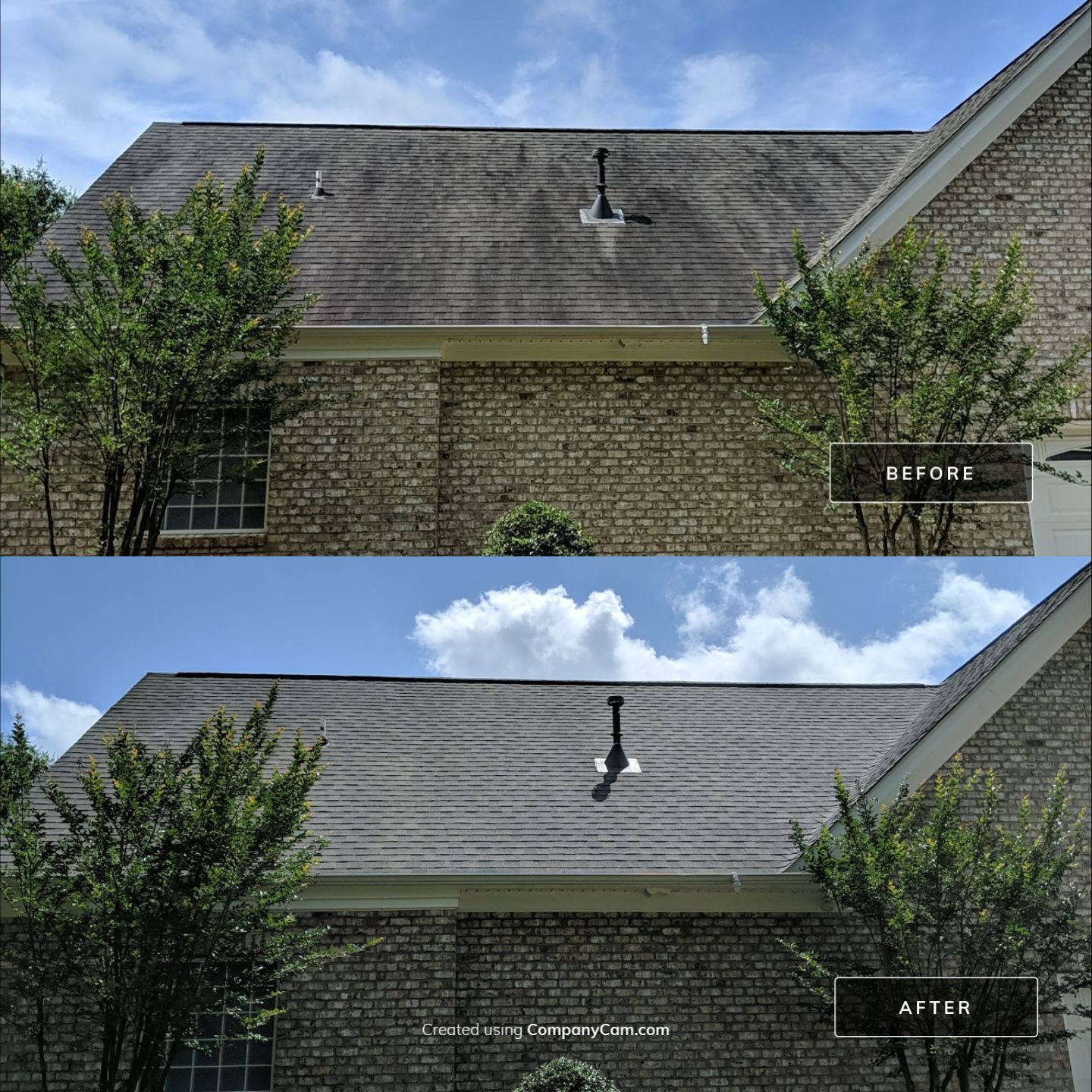
Homeowners often assume that stains appear because of winter—but in reality, stains become more visible due to seasonal conditions.
During the winter:
1. Sunlight hits the roof at a lower angle
Stains cast more shadow, making them darker.
2. Moisture sticks around longer
Morning frost, dew, and humidity don’t evaporate quickly.
3. Algae and moss stay damp
The more moisture present, the more they thrive.
4. Shingles contract in the cold
This can reveal underlying discoloration previously hidden by heat expansion.
5. Leaves and debris trap moisture
Especially in areas like Lake Wylie, Tega Cay, and Rock Hill where trees are abundant.
So while winter doesn’t cause most stains, it absolutely exposes them.
Why You Should Never Ignore Roof Stains – Especially in Winter
A stained roof in June looks unattractive.
But a stained roof in December?
It signals potential damage during the harshest months of the year.
Ignoring winter roof stains can lead to:
✔ Premature shingle deterioration
Algae feeds on shingle granules—your roof’s top layer of protection.
✔ Leaks due to moss lifting shingles
Moisture intrusion is more common in winter.
✔ Reduced roof lifespan
A dirty roof ages faster and breaks down sooner.
✔ Higher energy bills
Dark stains absorb more heat, affecting attic temperatures.
✔ Expensive structural and interior repairs
Moisture issues travel fast—walls, ceilings, insulation, and framing all take damage.
Winter is the worst time for roof problems to begin—and one of the best times to take action.
How Professional Roof Cleaning Solves These Problems Safely

Not all cleaning methods are safe for roofs. In fact, power washing a roof can destroy shingles, break seals, and void warranties. High-pressure washing is meant for concrete—not asphalt shingles, tiles, or metal roofing.
RC Power Cleaning uses the soft washing method, which is:
✔ Low-pressure (safe for all roof types)
✔ Highly effective at removing algae, mold, mildew, lichen, and moss
✔ Designed to kill growth at the root so it doesn’t return quickly
✔ Eco-friendly and approved for roofing materials
Soft washing doesn’t blast the roof—it treats it.
The specially formulated solution breaks down organic growth and stains, while the low-pressure rinse protects the integrity of your roofing materials.
This method extends your roof’s lifespan, improves curb appeal, and restores long-term performance.
Why York County Homes Are Especially Prone to Roof Stains
Homes in Lake Wylie, Rock Hill, Tega Cay, Fort Mill, and York, experience unique environmental conditions that speed up roof staining:
-
High humidity from Lake Wylie
-
Abundant tree cover shading roofs
-
Warm winters with moisture retention
-
Temperature swings leading to condensation
-
Older roofs in historic neighborhoods
-
Frequent rain and damp conditions
This means roofs in our region stay wet longer—and a wet roof is a breeding ground for algae, mold, and moss.
Professional roof cleaning is not just cosmetic—it’s a maintenance necessity in the Carolinas.
How Often Should You Clean Your Roof?
Most York County homes benefit from roof cleaning every 2–3 years, but frequency can increase depending on:
-
Amount of shade
-
Proximity to water
-
Age of roofing materials
-
Type of stains
-
Tree coverage
-
Roof color (darker roofs show stains more quickly)
If stains are visible, however, cleaning shouldn’t wait. The longer organic growth sits on the shingles, the more damage it causes.
Signs It’s Time to Call RC Power Cleaning Immediately
If you notice any of the following this winter, schedule a professional cleaning as soon as possible:
✔ Dark black streaks across the roof
A clear sign of algae spreading.
✔ Green or fuzzy patches
Indicates active moss growth.
✔ Raised or lifted shingles
Moisture is getting underneath.
✔ Shingles losing granules
Your roof’s UV protection is failing.
✔ Soft spots or sagging areas
Moisture may be trapped beneath the roofing system.
✔ Visible stains around chimneys or vents
Could signal leaks or deteriorating metal components.
Your roof is your home’s first line of defense—keeping it clean keeps it healthy.
The Benefits of Winter Roof Cleaning
Many homeowners assume cleaning should wait until spring, but winter cleaning actually offers unique benefits:
-
Stains lift more easily in cooler temperatures
-
Growth is dormant, making removal more effective
-
Prevents moisture issues from worsening
-
Protects your home during the wettest season
-
Restores roof color for better curb appeal year-round
Winter is not a downtime for roof maintenance—it’s one of the most strategic times to get it done.
Protect Your Roof This Winter with RC Power Cleaning
Your roof works hard 365 days a year. Don’t let stains, algae, mold, or moss put your home at risk during the most moisture-heavy season.
Contact us today to schedule your roof cleaning service.
📞 Or give us a call at 803-833-9469 for a free quote.